Blue Cypress Conservation Area is one of the most biodiverse freshwater ecosystems on Florida's east coast. Here's every species you might encounter — and the best seasons to see them.
Why Blue Cypress Is a Wildlife Hotspot
The Blue Cypress Conservation Area encompasses over 50,000 acres of protected freshwater wetlands in Indian River County, Florida. Unlike more developed tourist destinations, this ecosystem has been shielded from commercial activity for decades — creating a refuge where wildlife populations thrive at densities that are increasingly rare on Florida's east coast. The area's signature feature is its ancient bald cypress forest, with trees estimated to be 500 to 1,000 years old rising from tea-colored waters. These towering trees provide critical nesting habitat for bald eagles, ospreys, and dozens of wading bird species. Below the canopy, the marsh channels and open water support one of the healthiest alligator populations on Florida's Atlantic coast. On a typical 50-minute Marsh Beast tour, guests commonly observe 8 to 15 different species. Here's what you're most likely to see.
American Alligators
The star of the show. Blue Cypress is home to a large, healthy alligator population, and sightings are virtually guaranteed on every tour. Expect to see anywhere from 20 to 60 gators on a single outing — sunning on banks, gliding silently through the water, or lurking in vegetation. During spring mating season (April–May), males become vocal and territorial, bellowing across the marsh. In summer, you may spot females guarding nests or baby alligators riding on their mother's back. Our captains know every basking spot and territorial boundary in the system.
Bald Eagles
Blue Cypress is one of the most reliable bald eagle viewing locations on Florida's east coast. Multiple nesting pairs are resident in the conservation area year-round, building massive nests (some over 6 feet across) in the tallest cypress trees. Eagle sightings are most common during the nesting season from October through May, when adults are actively hunting fish to feed their young. Captain John knows the location of every active nest in our tour area and will position the boat for optimal viewing distance — close enough for great photos, far enough to avoid disturbing the birds.
Ospreys
Ospreys — sometimes called fish hawks — are one of the most dramatic hunters you'll witness on tour. These raptors hover over the water before diving feet-first to snatch fish from just below the surface. Blue Cypress's healthy fish population supports a large osprey community, and you'll frequently see them perched on dead snags or circling overhead. Osprey activity peaks during the morning tours when fish are most active near the surface.
Snail Kites: Florida's Rarest Raptor
This is the one that birdwatchers travel from around the world to see. The snail kite is a federally endangered raptor that feeds almost exclusively on apple snails — and Blue Cypress Conservation Area is one of the few remaining habitats where they can be reliably observed. These medium-sized raptors with distinctive curved bills are slow, deliberate fliers that patrol just above the marsh vegetation. Spotting a snail kite on your tour is not guaranteed, but our captains know their preferred hunting areas and will take you through those channels when conditions are right. If you're a birder, mention it when you arrive — Captain John loves helping serious birdwatchers add this species to their life list.
Wading Birds: Herons, Egrets, and More
The shallows and marsh edges at Blue Cypress are prime territory for Florida's spectacular wading birds. Species you're likely to encounter include:
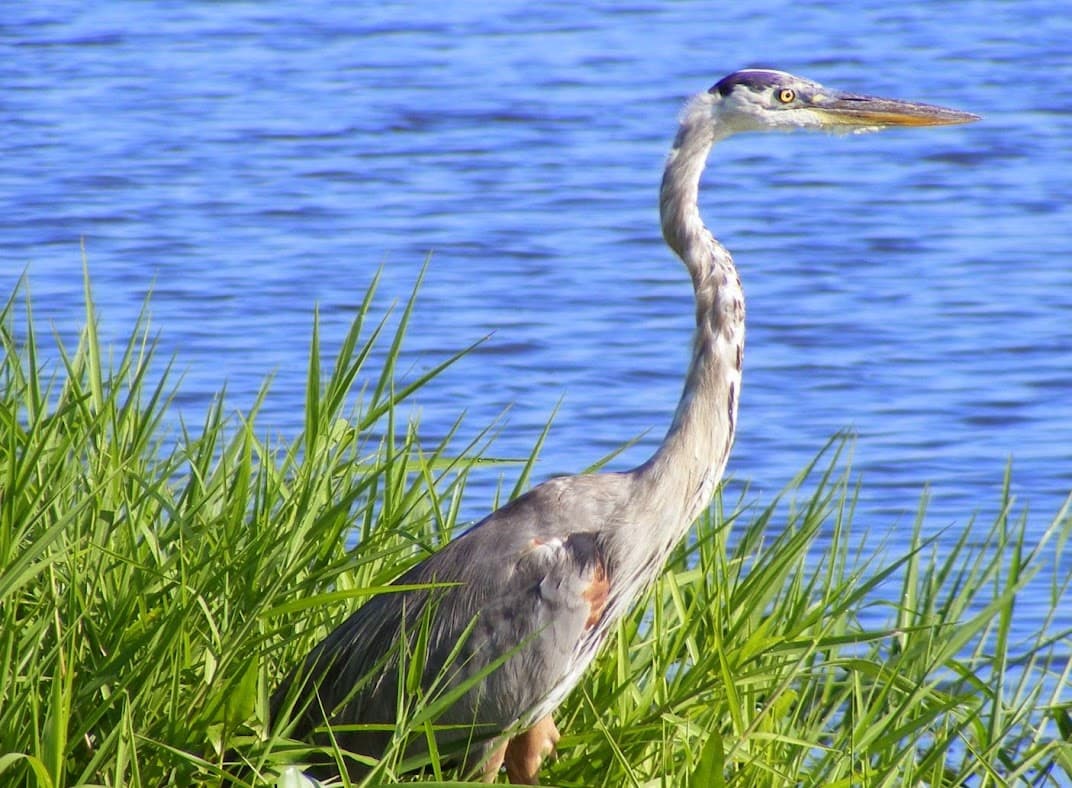
Great blue herons — standing motionless in the shallows, waiting to strike at passing fish. These are the largest herons in North America, standing up to 4.5 feet tall.
Great egrets — brilliant white plumage and elegant posture. They hunt alongside herons but prefer slightly deeper water.
Little blue herons — smaller and more secretive, often found in vegetated areas that larger species avoid.
Tricolored herons — active, dramatic hunters that dash through the shallows chasing fish.
Anhingas — sometimes called snakebirds because they swim with only their long neck above water. You'll frequently spot them perched on branches with wings spread to dry — a classic Florida wetlands sight.
Purple gallinules — vibrantly colored marsh birds with iridescent purple-blue plumage and red bills. They walk on lily pads with oversized feet and are one of the most photographed birds on our tours.
Turtles, Fish, and Other Wildlife
Beyond the headline species, Blue Cypress teems with life at every level. Florida softshell turtles and peninsula cooters bask on logs throughout the waterway. Largemouth bass, bluegill, and gar are visible in the clear, shallow sections. Depending on the season, you may also spot river otters, bobcats along the shoreline (rare but thrilling), and dozens of butterfly and dragonfly species that patrol the marsh edges. The ecosystem here functions as a complete, interconnected web — and Captain John's narration connects the dots between predator and prey, nesting cycles, and the seasonal rhythms that make every tour slightly different from the last.
Best Seasons for Wildlife Viewing
Spring (March–May): Peak overall wildlife activity. Alligator mating season, active bald eagle nests with chicks, ospreys fishing, and migratory birds passing through. The single best time to visit.
Summer (June–August): Baby alligator season. Nesting wading birds. Lush, green vegetation. Hot but rewarding — the ecosystem is at maximum energy.
Fall (September–November): Water levels begin to drop, concentrating wildlife into smaller areas. Excellent for photography as animals are more densely packed. Migratory species begin arriving.
Winter (December–February): Bald eagle nesting season peaks. Migratory ducks and other waterfowl arrive. Alligators are less active but still visible on warm days. Comfortable temperatures make for pleasant touring.
Book Your Wildlife Adventure
Every Marsh Beast tour is a narrated wildlife experience — not just a thrill ride. Captain John identifies every species you encounter, explains their behavior, and shares the ecological stories that make Blue Cypress Conservation Area one of Florida's most important freshwater ecosystems. Tours depart daily. The shared Marsh Beast experience is $52 per person. For a more exclusive outing, our private Florida Cracker tour starts at $832 for groups up to 15.