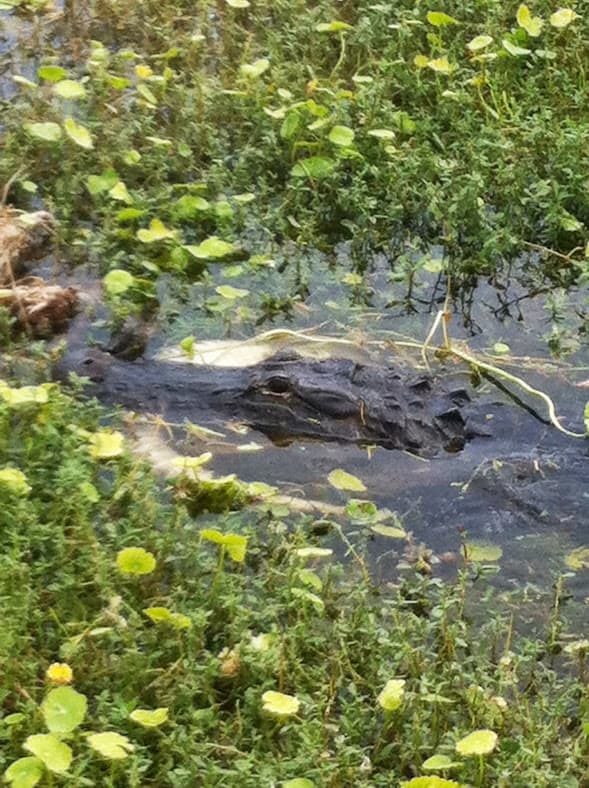
Blue Cypress Conservation Area is one of the most alligator-dense freshwater ecosystems on Florida's east coast. Here's what you'll encounter on a Marsh Beast tour — and why our captains almost guarantee a sighting.
How Many Alligators Are at Blue Cypress?
The Blue Cypress Conservation Area spans over 50,000 acres of protected freshwater wetlands in Indian River County, Florida — and it's home to a thriving population of American alligators. While exact counts are difficult in wild ecosystems, our captains estimate they see between 20 and 60 alligators on a typical 50-minute tour, depending on the season, weather, and time of day. That's not a typo. Blue Cypress is one of the most alligator-dense freshwater habitats on Florida's east coast, largely because the area has been protected from development for decades. The gators here aren't habituated to tourist airboats the way they are at more commercialized locations — these are truly wild animals in an undisturbed ecosystem.
Best Time of Year to See Alligators
Alligators are cold-blooded reptiles, which means their activity level tracks closely with air and water temperature. Here's a seasonal breakdown of what to expect:
Spring (March–May): This is peak alligator season. Mating courtship begins in April, and males become extremely active and vocal — you'll hear them bellowing across the marsh. Gators are frequently seen sunning on banks and cruising the open water. Spring tours almost always produce the highest sighting counts.
Summer (June–August): Nesting season. Females build mound nests from vegetation near the water's edge and become fiercely protective. You may spot baby alligators riding on their mother's back — one of the most photographed moments on our tours. Summer heat keeps gators active, though they tend to seek shade during the hottest midday hours.
Fall (September–November): Still excellent viewing. Hatchlings from summer nests are growing and frequently visible. Water levels begin to drop, concentrating wildlife into smaller areas — which actually increases sighting density.
Winter (December–February): Alligators slow down in cooler weather but don't truly hibernate. They enter a state called brumation, where they remain lethargic but will still bask on warm, sunny days. Winter tours typically see fewer gators, but the ones you find tend to be larger adults soaking up whatever warmth they can get.
What Makes Blue Cypress Different from the Everglades
Most people associate Florida alligators with the Everglades, but Blue Cypress Conservation Area offers a fundamentally different experience. The Everglades is a vast sawgrass prairie — flat, open, and heavily trafficked by tourist operations. Blue Cypress is an ancient bald cypress swamp: towering trees draped in Spanish moss, narrow channels winding through dense vegetation, and mirror-still water reflecting the canopy above. The intimacy of the Blue Cypress ecosystem means you're much closer to the wildlife. Gators here aren't competing with dozens of other tour boats for space. Captain John navigates channels that most operators don't even know exist, getting you within safe but remarkably close viewing distance of animals that are behaving naturally — not performing for tourists.
Safety on the Water
A question we get almost daily: is it safe to be this close to alligators? Yes — with the right captain. USCG Master Captain John has over 25 years of experience navigating these waterways and reading alligator behavior. He knows which gators are relaxed and which are signaling agitation, and he adjusts the boat's position accordingly. Our airboats are elevated well above the waterline, and all guests are provided with life jackets. We maintain a respectful distance that allows incredible viewing and photography without disturbing the animals or putting anyone at risk. Captain John's rule: we're guests in their home, and we act like it.
Tips for Photographing Alligators on Your Tour
Our captains know the best spots for photography and will position the boat to give you optimal angles. A few tips from years of experience:
Bring a phone or camera with at least moderate zoom capability — even though we get close, a 3-5x zoom captures incredible detail on the gator's scales and eyes. Morning tours (9:00 AM and 10:30 AM) offer the best lighting, with warm golden tones reflecting off the water. Avoid flash photography, which can startle wildlife and ruins the natural color of the scene. The quieter sections of the tour, when Captain John cuts the engine and drifts through narrow channels, produce the most dramatic shots — gators basking on logs, ospreys perched in cypress trees, and reflections on perfectly still water.
See Them for Yourself
Blue Cypress Conservation Area is one of Florida's last truly wild freshwater ecosystems, and our alligator population is thriving. Whether you're a wildlife photographer, a family looking for an educational adventure, or simply curious about Florida's most iconic reptile, a Marsh Beast tour delivers the real thing — not a theme park imitation. Tours depart daily at 9:00 AM, 10:30 AM, 12:00 PM, 1:30 PM, and 3:00 PM. The shared Marsh Beast experience is $52 per person, or book a private Florida Cracker tour starting at $832 for groups up to 15.